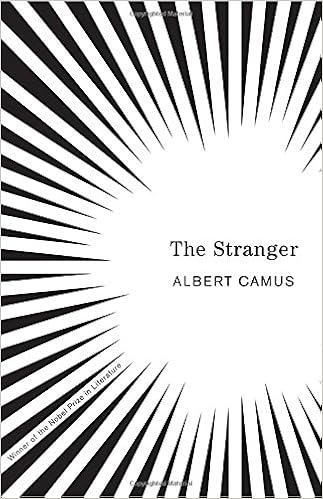
 The Stranger like pretty much every other novel that we’ve
read this year applies quite well to my question of “To what extent we have
free will?”. Written with a existentialist philosophy, The Stranger following a
few days in the life and eventually the death of a French Algerian seemingly
apathetic man by the name of Meursault. Due to its basis in existentialism The
Stranger makes a strong argument towards free will only being applied in an
extremely limited extent.
The Stranger like pretty much every other novel that we’ve
read this year applies quite well to my question of “To what extent we have
free will?”. Written with a existentialist philosophy, The Stranger following a
few days in the life and eventually the death of a French Algerian seemingly
apathetic man by the name of Meursault. Due to its basis in existentialism The
Stranger makes a strong argument towards free will only being applied in an
extremely limited extent.
First off one of the basic pillars
of existentialism is that reason is impotent when dealing with human life, or
in other words human actions don’t always make logical sense. This is a clear
argument against the idea that people have a large inclination towards free
will. If a person can’t logically think through their action’s than they have a
limited amount of control over the actions that they take. In this novel Meursault
is a clear example of this. In the end of part one Meursault murders an Arabic
man. At first it seems like an accident, with Meursault accidentally pulling
the trigger through his coat jacket. But afterwards, under the glare of the
sun, Meursault pulls the trigger four more times. When asked about it Meursault
states that he doesn’t understand why he did it. It just felt right. Because
Meursault had no logical reasoning behind his decision his capacity toward free
will was limited.
Another pillar of Extentialism is the idea that we live in a chaotic world. While on one hand this may add to the idea of having free will as it implies that there is no supreme being controlling our actions on a day to day basis. However, it also means that we cannot control what happens to us. In the context of The Stranger while Meursault made the action that led him to his trial he cannot control what happens to him during the trial. He couldn’t control the jury, or the lawyers and he had no control over the outcome of his trial or how where the rest of his life would lead.
Another pillar of Extentialism is the idea that we live in a chaotic world. While on one hand this may add to the idea of having free will as it implies that there is no supreme being controlling our actions on a day to day basis. However, it also means that we cannot control what happens to us. In the context of The Stranger while Meursault made the action that led him to his trial he cannot control what happens to him during the trial. He couldn’t control the jury, or the lawyers and he had no control over the outcome of his trial or how where the rest of his life would lead.
